What it is
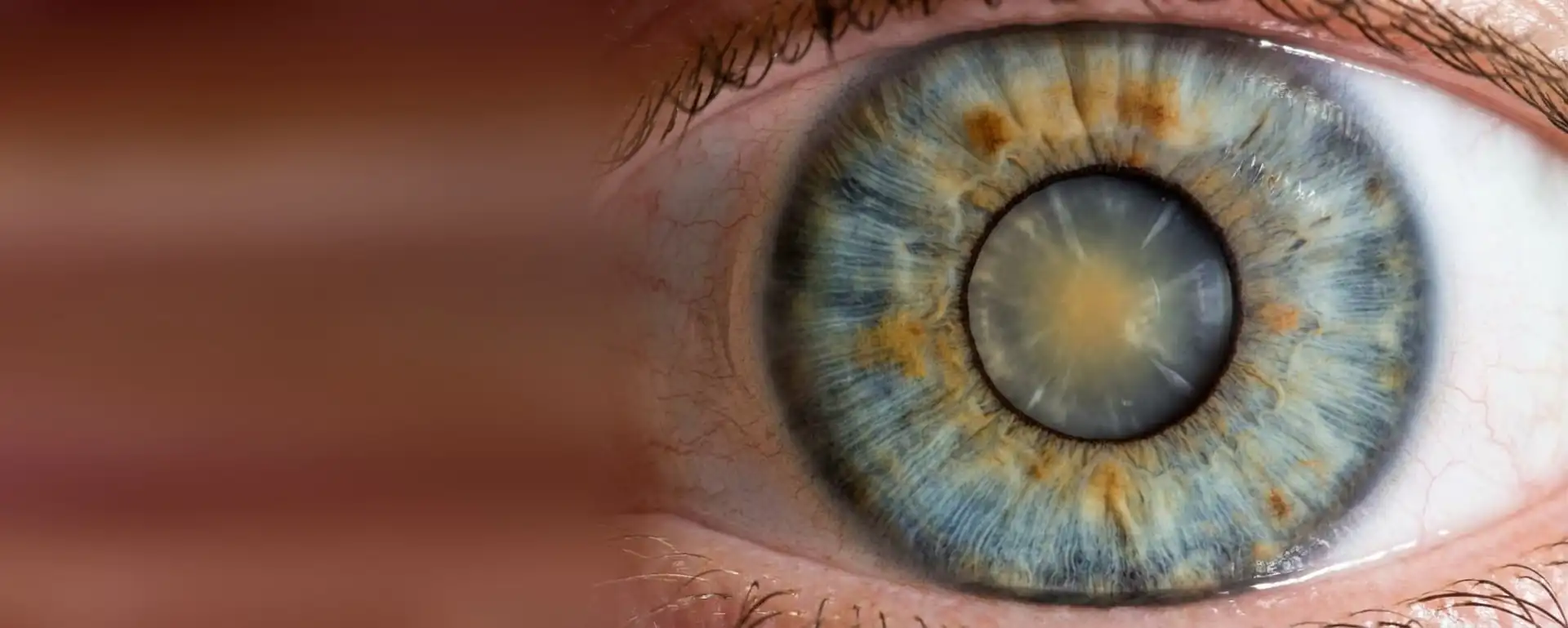
Inside the eye, behind the pupil, there is a clear natural lens: the crystalline lens. It focuses light onto the retina, like the lens of a camera. When it becomes cloudy, we call it a cataract.
It is almost always down to age. From 40 onwards the risk starts to rise, and over the years nearly all of us will have one, in one eye or both. It progresses at very different speeds: some people take decades to notice it and others notice it within a couple of years.
Smoking, diabetes, many years of sun and steroids taken by mouth or inhaled over a long time all make it appear sooner. Stopping smoking and wearing sunglasses with a filter and a hat helps. What does not exist are drops or tablets that dissolve it or slow it down.
Symptoms
It usually starts so slowly that you get used to it. Typically:
- Blurred vision, or like looking through a steamed-up window, which glasses do not fully fix.
- Glare: headlights at night, a low sun or a window with light behind it bother you much more.
- Colours look duller or more yellow.
- Needing more light to read.
- Frequent changes in your prescription. Sometimes a person who used reading glasses starts to read without them: that is the cataract, not an improvement.
- Double vision in one eye, in some cases.
When to have surgery
You often hear that "you have to wait until it is ripe". That is no longer the case. Waiting until the cataract is very hard gains nothing and makes the surgery more difficult.
The question that matters is a different one: does it stop you doing what you need to do? Driving at night, reading, sewing, watching TV, recognising people in the street, going out without fear of tripping. If the answer is yes and the operation can improve it, it is a good time. If new glasses are enough for you to get by, we can wait safely.
The visual acuity measured on the letter chart does not tell the whole story. Some people read almost every letter in clinic and yet glare stops them driving at night. That counts too.
Having the operation also protects you
Sometimes there are other reasons to operate sooner: when the cataract stops me seeing the retina well enough to monitor diabetic retinopathy or macular degeneration, when there is a big difference in prescription between the two eyes, or when the thickened lens closes the drainage angle of the eye and raises the pressure.
Before the operation
At the appointment before surgery I examine the whole eye, not just the cataract. If there is anything in the retina, the cornea or the optic nerve that will limit the result, I would rather you knew beforehand.
- Biometry with the IOLMaster 700: it measures the eye with light, without touching it, and with that data I calculate the exact power of the lens I am going to implant.
- Cornea and astigmatism: if you have astigmatism, I check how much and in which direction, to consider a toric lens.
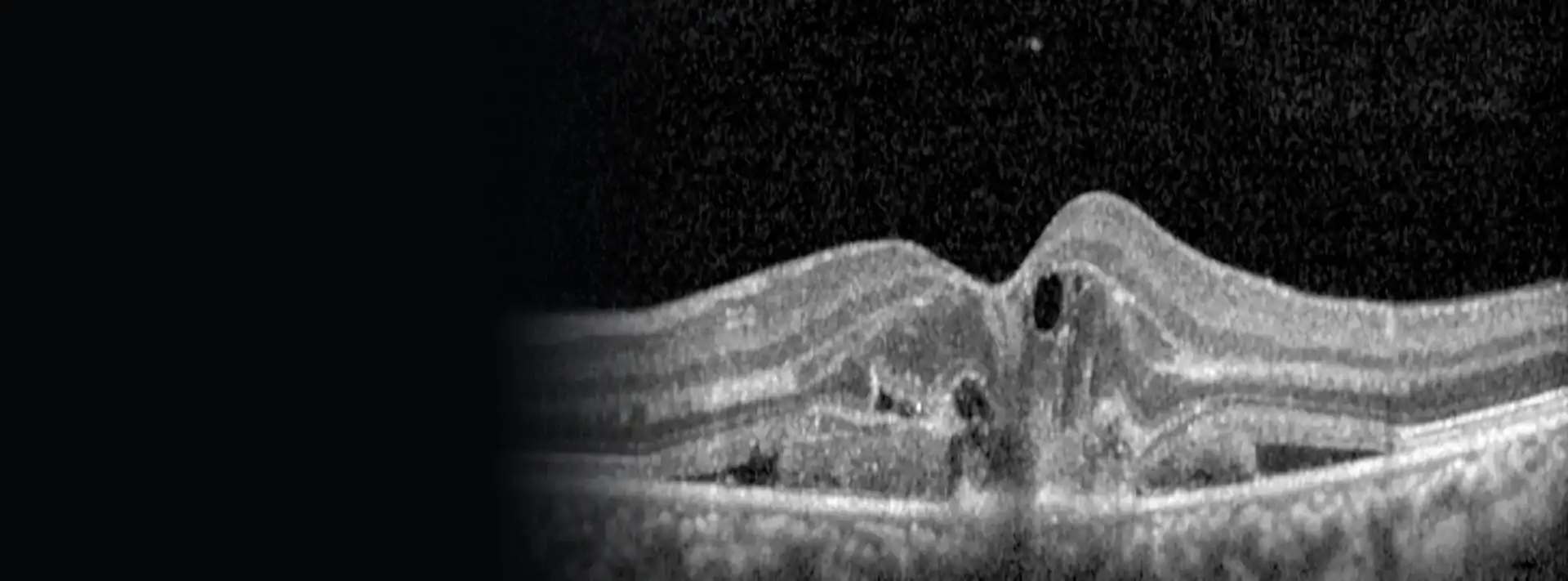
- Macula: with the OCT I check that the centre of the retina is healthy. This weighs heavily when choosing the lens.
We also talk about which distances you use most (driving, computer, reading) and whether you mind wearing glasses. With that, we choose the type of lens together.
If you take anticoagulants or antiplatelet medicines, do not stop them on your own. In most cases there is no need to stop them for this surgery, but we review it beforehand. If you have a general illness that is poorly controlled, I will ask you to see your doctor about it first.
The operation
It is done by phacoemulsification. Through an incision of about 2 mm at the edge of the cornea, I break up the lens with ultrasound, remove it by suction and in its place put a folded intraocular lens, which unfolds inside the eye. The incision is so small that it seals itself, with no stitches.
- The anaesthetic is given as drops. You are awake, you do not see the operation in detail and you do not feel pain. If you are nervous, a mild sedative can be added.
- It is a day procedure: you go home the same day, with the eye covered and with someone to accompany you.
- One eye is operated on at a time.
I choose the lens using the IOLMaster 700 measurements, which also give me the exact orientation for placing toric lenses. In the surgery section you will find videos of phacoemulsification of a mature cataract and of the lens being implanted.
Which lens to choose
The lens stays for life, so it is worth thinking about. There is no lens that is perfect for everyone. Each type has its advantages and its trade-offs.
Monofocal
It focuses well at one distance, nearly always far away. It gives the sharpest vision with the fewest light effects. On the other hand, you will need glasses to read and often for the computer.
Toric
It also corrects astigmatism of the cornea. If you have astigmatism and want to depend less on glasses, this is the option. It comes in a monofocal version and in the ones with several focal points.
Extended depth of focus (EDOF)
It stretches focus from distance to intermediate range: the computer, the car dashboard, the kitchen. For small print you may still need glasses. It causes fewer halos than a trifocal and copes better with minor problems of the macula or previous laser eye surgery.
Multifocal or trifocal
It splits light into several focal points so you can see far away, at middle distance and close up. It is the one that frees you most from glasses. The price is that at night it is common to see halos or glare around lights and slightly less contrast. Almost everyone adapts over the months, but not everyone to the same degree.
I do not recommend it if the macula, the optic nerve or the cornea are not healthy. With AMD or macular swelling due to diabetes, its drawbacks outweigh its advantages.
Monovision
With monofocal lenses, one eye is set for distance and the other a little closer. The brain combines the two images. It works very well in people who already used it with contact lenses; others find it harder. For night driving, glasses are sometimes a good idea.
Toric, extended depth of focus and multifocal lenses cost extra compared with a monofocal lens. I explain this in detail in clinic, with no obligation.
Recovery and the second eye
Many people notice they see better the next day, although vision takes a few weeks to fully settle. Up to nine in ten people find they manage better in daily life after the operation on the first eye.
- You will use drops for a few weeks to prevent inflammation and infection.
- Do not rub your eye. Protect it at night for the first few days, as I advise.
- You can read, watch TV and go for walks from the start.
- Avoid swimming pool water and dust for the first few weeks.
- If you need glasses, they are prescribed once the eye is stable, usually between one and four weeks later.
The second eye
If both eyes have a cataract, operating on the second is worth it: it improves depth perception and driving, and reduces falls even further. Also, with one eye operated on and the other not, the difference between them can be uncomfortable. It is usually done once the first eye is stable, and the result of the first helps me fine-tune the lens for the second.
Risks and warning signs
It is one of the most common and safest operations there is. Complications that leave permanent loss of vision are rare, but it is worth knowing about them.
Call straight away if in the following days you notice pain that is getting worse, the eye getting redder and redder, or a drop in vision. It could be an infection inside the eye (endophthalmitis). It is very uncommon, but it needs urgent treatment.
And at any time, even years later: new floaters, flashes or a shadow over part of your vision. The risk of retinal detachment is somewhat higher in eyes that have had surgery, especially in short-sighted people.
- Macular oedema: the macula swells a few weeks later and vision becomes blurred. It shows up on the OCT and usually responds well to drops.
- Light effects: halos, reflections or, at first, a crescent-shaped shadow to one side. They almost always fade over time.
- High pressure in the first few days or from the steroid drops. It is checked at your follow-up visits.
Secondary cataract and YAG laser
Months or years later, the thin capsule the lens sits in can become cloudy. Your vision clouds over again, as if the cataract had come back. This is called posterior capsule opacification and it is common.
It is fixed with YAG laser: in the clinic, with drops, in a few minutes and without pain. It opens a window in the centre of the capsule and vision clears within a few days. It is only done if the clouding bothers you, not as a precaution. Afterwards, as with any eye surgery, it is worth watching out for the symptoms of retinal detachment.
Is your distance vision worse, do headlights dazzle you, or have you been told you have a cataract?
Call and I will give you an appointment. I examine you, we see how much it affects you and we talk calmly about which lens suits the way you live.